Lab Guides
What's Actually Inside a Lyophilized Peptide Vial
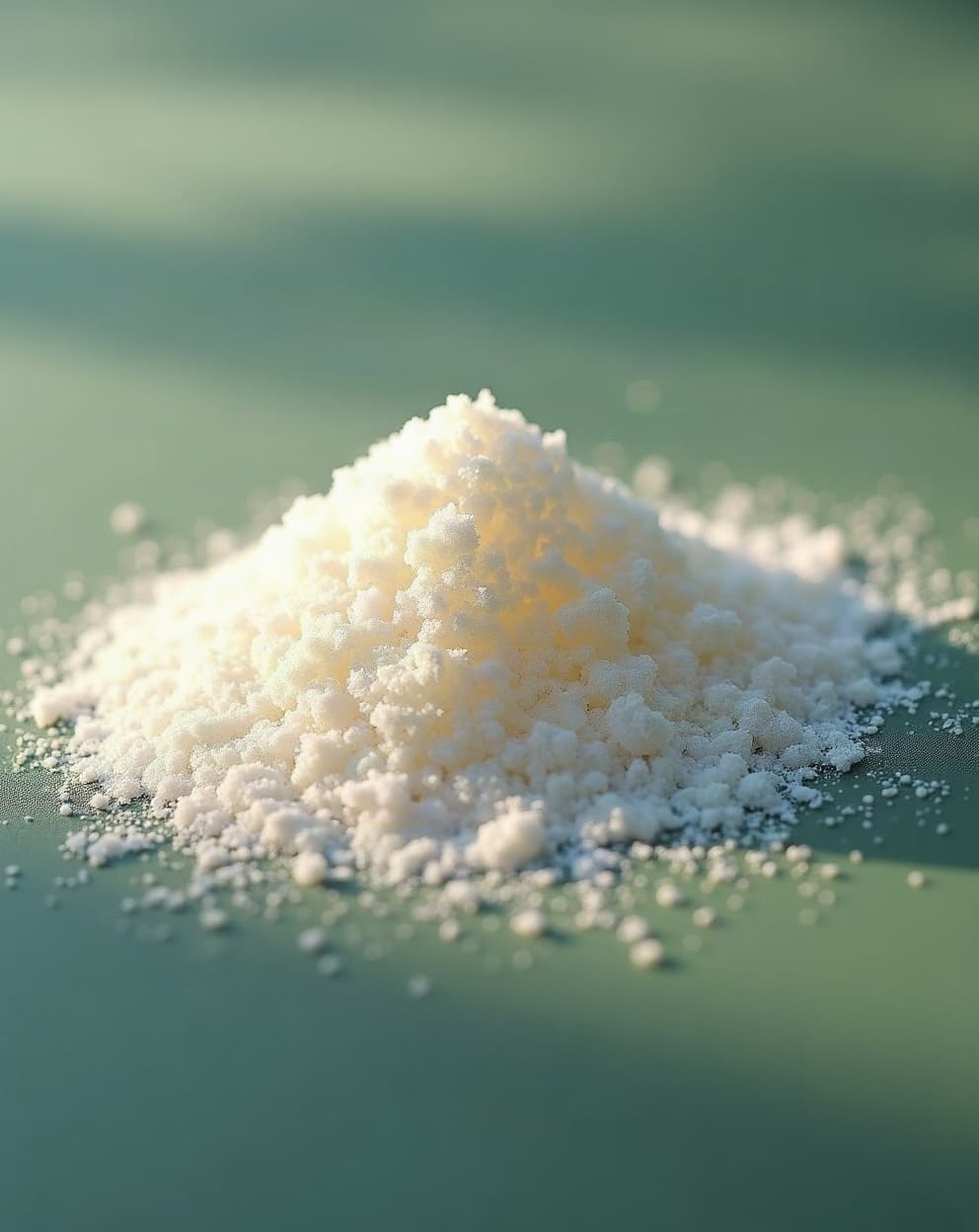
A lyophilized vial's visible cake is not a pure block of target compound. It is a mixture, and the target peptide is only one component of it, alongside material that was always going to be part of a real-world synthesis and formulation process. Understanding what else is in there is what makes a certificate of analysis meaningful instead of decorative.
Most research peptides exist as a salt, commonly an acetate or TFA salt, because the free peptide base is rarely what comes out of a synthesis and purification run. That counterion has real mass and travels with the peptide through freeze-drying, which means a portion of the cake's weight is the salt, not the peptide sequence itself. A vial's net peptide content, the actual mass of target compound, is a distinct figure from the vial's total powder mass, and the two are not the same measurement.
Many formulations also include bulking agents, excipients such as mannitol, glycine, sucrose, or trehalose, added specifically to give the freeze-dried cake structure and to protect the peptide during the drying process itself. These are standard, well-characterized additions in lyophilization generally, not a sign of dilution, but they do mean a larger-looking cake is not automatically a larger peptide dose.
Residual moisture is another variable that appearance cannot reveal. Secondary drying during lyophilization leaves a small, controlled amount of water behind, and that figure is only measurable through lab methods like Karl Fischer titration, not by looking at the vial. Synthesis byproducts, truncated or deletion sequences that share most of the target's structure, and any carryover solvents from manufacturing round out the rest of what a real vial can contain, and each requires its own analytical method to detect.
The practical implication is that visual inspection of a cake, its size, color, or density, tells you almost nothing about quantity, purity, or identity. Those three questions are answered separately: net content and purity by HPLC, identity by mass spectrometry, and residual solvents or moisture by their own dedicated tests. A lot-specific certificate of analysis that reports all of it is the only way to actually know what is in a given vial.